
For SMB vs Enterprise consulting sales, make these 7 critical shifts

Welcome to the Dojo!
When I started my first business, I struggled in sales. I went from working with Fortune 500 companies to pitching small local businesses — and it was humbling.
About two years in, we found our footing. Things were working. So naturally, my cofounder and I wanted bigger projects and better margins. We shifted toward mid-size and enterprise clients, assuming I’d close deals just as quickly. I was so wrong.
The game changed. And I had to learn a new set of rules.
This week I released this new video to help consultants understand what works when selling to SMBs, what works when selling to enterprise — and the shifts required if you’re moving upmarket.
That distinction matters more than you think.
On the Mat
- Let’s Train: The uncomfortable shift that happens when you move upmarket.
- Ask Feras: “Pitching larger clients: what am I doing wrong?”
- Sharpen the Blade: Selling to Small Business vs. Enterprise Clients: 7 Shifts for More Sales
Let's Train
Let’s talk about the uncomfortable shift that happens when you move upmarket.
You close an SMB deal in two weeks. You feel momentum.
Then you pitch enterprise.
The meeting goes well. They say they’re excited. And then nothing moves for months.
You assume you did something wrong.
In reality, you entered a different system.
Here are four structural differences that change everything:
1. Speed vs Stamina
SMB deals often close in 2–8 weeks.
Enterprise B2B sales cycles frequently stretch 3–9 months. For complex initiatives, even longer.
SMBs move on urgency.
Enterprise moves on alignment and budget cycles.
2. Decision Makers vs Decision Systems
In small business, you pitch the owner.
In enterprise, you pitch a node inside a larger system.
Research shows enterprise buying groups often include 6–10 stakeholders.
That means your champion must resell you internally.
Your job is not just to persuade. It’s to equip.
Provide:
- ROI logic
- Executive summaries
- Justification language
Make it easy for them to advocate for you.
3. Trust vs Institutional Protection
SMBs close on personal trust.
Enterprise closes on risk mitigation.
Security reviews. Insurance requirements. Vendor onboarding.
This isn’t skepticism. It’s governance.
When you expect bureaucracy, you prepare for it.
When you personalize it, you retreat.
4. Constrained Budget vs Justified Budget
SMBs ask: “Can I afford this?”
Enterprise asks: “Can I defend this?”
If you pre-discount, you weaken your internal defense story.
Instead, clarify the impact of your solution and the cost of inaction.
So when pitching larger clients, keep in mind that:
- You don’t need a different service to go upmarket.
- You need a different stance. Same skill. Different arena.
If enterprise feels harder, it’s usually not because you’re underqualified.
It’s because you’re applying small-business logic to a corporate decision system.
Ask Feras Recap
🔥 The Challenge
I pitched a Fortune 1000 company a few weeks ago. I’ve followed up a couple of times, but they still haven’t signed the contract, even though my main point of contact said they liked the solution and the pricing felt reasonable. What am I doing wrong?
🛠️ What I Told Them
You’re probably not doing anything wrong.
If your main point of contact is aligned, the proposal is now moving through internal layers — management, finance, legal, procurement. That process takes time. Enterprise sales cycles are significantly longer than selling to a local small business owner. Alignment happens in stages, not days.
Adjust your expectations — and your follow-up cadence — accordingly.
Sharpen the Blade
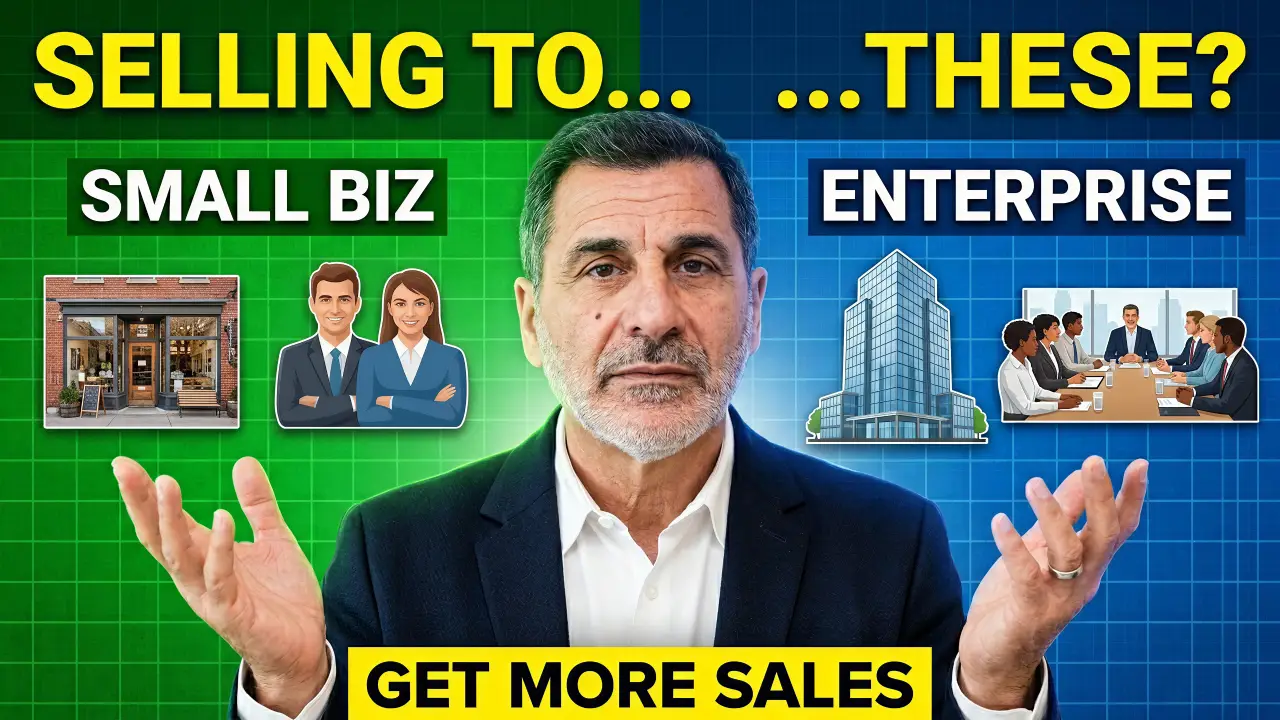
If you want the full breakdown of the 7 shifts — with examples and templates — watch the complete video here.
Subscribe to the Black Belt Startup Newsletter
Weekly, 5-minute insights to help you escape the 9–5, land your first clients, and grow a thriving business.