
Remember this rule in your next negotiation

Welcome to the Dojo!
Over the last two weeks, we’ve covered how to prepare for a negotiation and seven practical ways to handle the negotiation itself.
This week, I want to focus on the one rule I try to follow in every negotiation.
You don't need fake deadlines, pressure tactics, or clever psychological tricks to negotiate consulting deals.
In fact, those tactics can undermine the thing a consulting relationship depends on most: trust.
On the Mat
- Let’s Train: Every concession should receive a concession.
- Ask Feras: “What should I do when a client asks for a discount unexpectedly on a call?”
- Sharpen the Blade: Watch conversations with specific negotiation scenarios
Let's Train
There's no shortage of negotiation advice built around manipulating the other person.
Fake scarcity. Artificial discounts. Invented competition. "I need to talk to my manager."
Pressure to sign before the call ends.
You may occasionally get a signature using those techniques. You may also create a client who begins the engagement wondering whether they made a mistake.
Remember: your negotiation behavior previews what working with you will feel like.
That doesn't mean becoming passive.
It means learning to distinguish between an objection and an actual negotiation.
Suppose a client asks: "Why is the fee $25,000?"
That's not necessarily a negotiation, they may simply want you to explain the price.
If they say: "Our approved budget is $20,000."
Now you've learned about a constraint.
And if they say: "We need the same scope for $20,000."
Now you're negotiating.
Too many consultants hear the first question and immediately start offering discounts.
Slow down.
Ask: "Which part of the proposal is creating concern?"
Or:
"Would changing the payment schedule solve the budget issue?"
Understand the problem before giving something away.
And that brings me to the most important principle in the entire negotiation process:
Every concession should receive a concession.
- If a client wants a faster timeline, ask them to provide approvals within two business days.
- If they want more scope, increase the fee or extend the timeline.
- If they want longer payment terms, ask for a larger upfront payment.
The objective isn't to "win" the negotiation. It's to reshape the agreement so both parties receive something they value and can enter the engagement feeling good about the deal they've made.
Ask Feras Recap
 The Challenge
“What should I do when a client asks for a discount unexpectedly on a call?”
 What I Told Them
Don't answer immediately. Acknowledge the concern and (politely) ask why. Once you understand what's driving the request, you can decide whether to hold your position, restructure the deal, or make a concession in exchange for something valuable.
Sharpen Your Blade
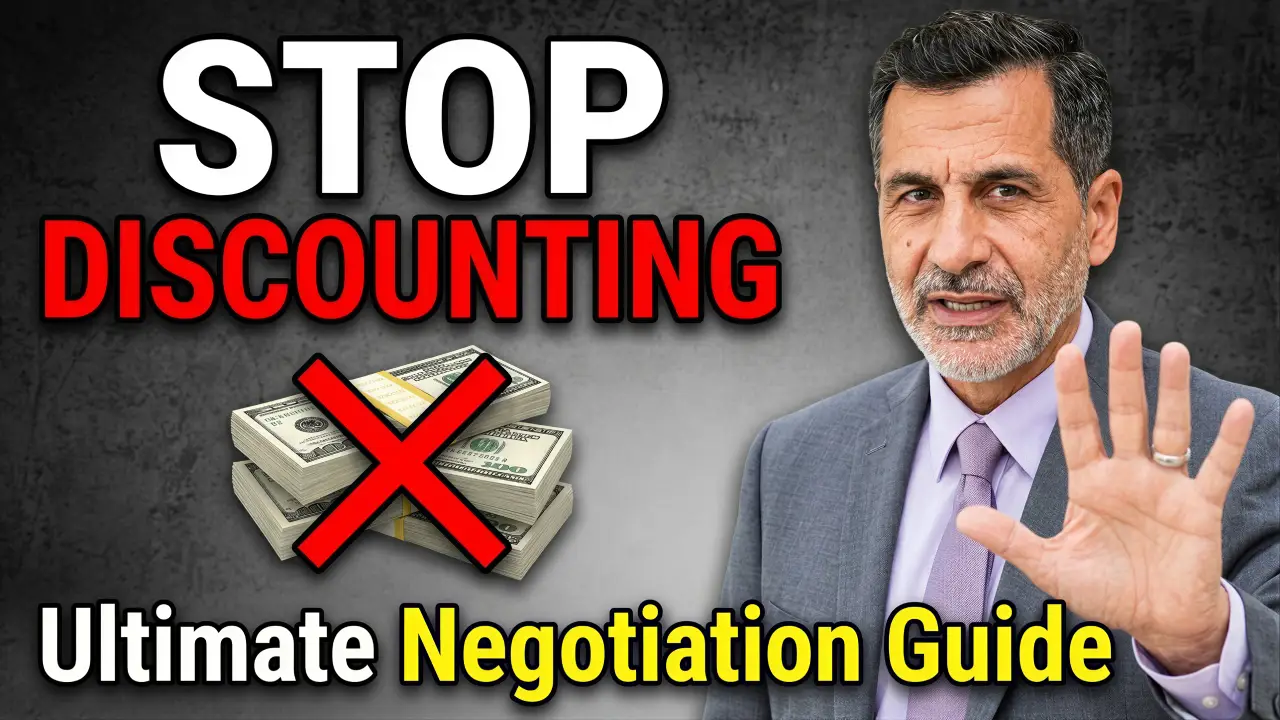
In The Ultimate Consulting Business Sales Negotiation Guide, I demonstrate these conversations with specific client scenarios and give you a preparation checklist you can use before your next negotiation.
Subscribe to the Black Belt Startup Newsletter
Weekly, 5-minute insights to help you escape the 9–5, land your first clients, and grow a thriving business.