
Here are growth mindset’s biggest lessons for entrepreneurs

Welcome to the Dojo!
Over the past couple of weeks, I've been revisiting Mindset, The New Psychology of Success, by Dr. Carol Dweck. It's one of those books that gets mentioned often, but rereading it after years of building businesses, coaching founders, and making my own share of mistakes gave me a different perspective.
One idea kept coming back to me.
Many entrepreneurs believe success comes from finding the right opportunity, the right strategy, or even the right mentor. Those things matter, but Dweck argues that the lens through which you interpret success and failure may matter even more.
On the Mat
- Let’s Train: Setbacks as viewed by fixed vs. growth mindsets
- Ask Feras: Can someone develop a growth mindset later in life?
- Sharpen the Blade: [Livestream this Tuesday] The Founder Mindset Workshop | How Entrepreneurs Build a Growth Mindset
Let's Train
Fixed mindset asks: "What does this say about me?"
Growth mindset asks: "What can I learn from this?"
The internal monologue sounds something like this:
Fixed mindset: "I failed."
Growth mindset: "Interesting... What is this trying to teach me?"
Failure still hurts, criticism still stings, and rejection still disappoints. The difference isn't emotional toughness. It's the meaning we assign to the experience.
People with a fixed mindset see setbacks as verdicts. People with a growth mindset see them as information.
That sounds simple until you're the founder whose proposal gets rejected, whose first marketing campaign falls flat, or whose biggest prospect chooses a competitor.
One of my favorite examples from the book is Thomas Edison. Most people picture him as a lone genius working in a laboratory. In reality, he built teams, experimented relentlessly, learned from countless failures, and improved continuously. His greatest advantage wasn't extraordinary talent. It was his approach to learning.
The same pattern appeared throughout the book.
Michael Jordan was cut from his high school varsity basketball team.
Wilma Rudolph overcame childhood illnesses that left doctors believing she might never walk normally again.
Different industries. Different circumstances. The common thread was persistence, adaptation, and continuous learning.
The lesson applies just as much to entrepreneurship.
Many founders avoid difficult sales conversations because rejection feels personal.
They hesitate to launch because they want everything to be perfect.
They defend old strategies instead of asking whether there's a better one.
One section especially stood out to me as someone who coaches entrepreneurs.
Dweck explains that a growth mindset isn't simply about working harder. It's about combining effort with better strategies, seeking feedback, and changing course when something isn't working.
That's exactly what I see with successful founders.
They don't stubbornly repeat the same approach, hoping for a different result. They gather information, adjust, and keep moving.
Ask Feras Recap
🔥 The Challenge
"Can someone develop a growth mindset later in life?"
🛠️ What I Told Them
Absolutely. In fact, many entrepreneurs don't develop it until after experiencing setbacks. The important step isn't avoiding failure. It's learning to treat every outcome as feedback that helps you make better decisions going forward.
Sharpen the Blade
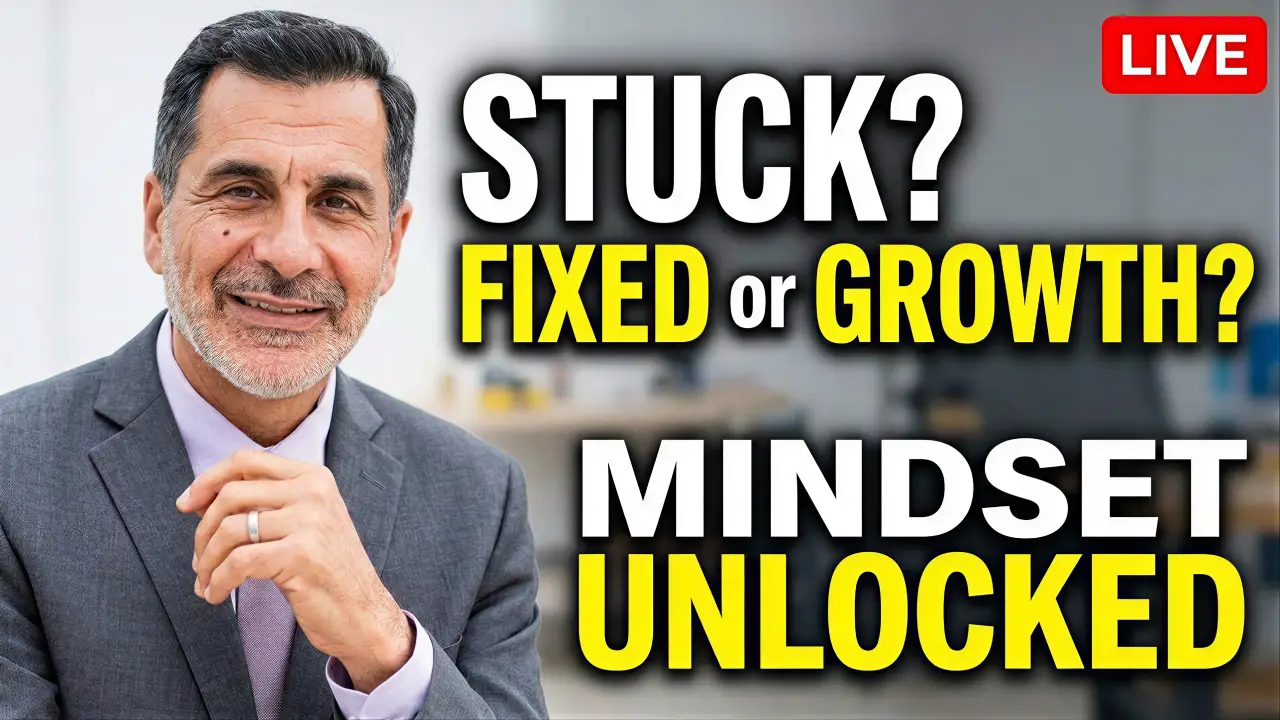
This Tuesday, during my weekly livestream, I’ll dive deep into this subject. I’ll be sharing key insights from Mindset and, most importantly, actionable ways for founders to apply them to their own business journeys:
“The Founder Mindset Workshop | How Entrepreneurs Build a Growth Mindset”
Subscribe to the YouTube channel and get notified here.
Subscribe to the Black Belt Startup Newsletter
Weekly, 5-minute insights to help you escape the 9–5, land your first clients, and grow a thriving business.