Four behaviors that can change your business

Welcome to the Dojo!
A prospect ghosts you.
Your offer doesn’t sell.
A competitor wins the project.
Your first instinct in those moments matters.
What do you do next?
In this week’s newsletter, I share four ways successful entrepreneurs respond when things don’t go their way, and how you can start practicing them yourself.
On the Mat
- Let’s Train: Four ways successful entrepreneurs respond
- Ask Feras: “How do I know which new skill I should work on first?”
- Sharpen the Blade: [Video] Growth Mindset Changes Everything for Consultants
Let's Train
Over the years, I’ve stopped asking what personality successful entrepreneurs have.
I find another question much more useful:
How do they respond when things don’t go their way?
Successful founders come in all kinds of personalities. Some are outgoing. Others are reserved. Some love risk. Plenty don’t.
But I’ve noticed several responses that show up repeatedly.
1. Curiosity beats certainty
One of the biggest adjustments I had to make after leaving corporate was becoming comfortable saying:
“I don’t know.”
In corporate, expertise earns respect.
Entrepreneurship constantly makes you a beginner again.
Suddenly you’re dealing with sales, marketing, pricing, negotiations, hiring, finance, and problems you've never encountered.
You can protect your identity as the expert, or you can get curious.
Why did this client buy?
Why didn’t that prospect move forward?
What am I missing?
You don’t need to know everything. You need to remain curious enough to keep learning.
2. Action beats perfection
Experienced professionals are trained to produce polished work.
That’s valuable when serving clients.
It can become dangerous when building a business.
You spend another month on the website.
Rewrite the offer again.
Research ten competitors.
Watch another 20 videos.
At some point, one real conversation teaches you more than another hour of preparation.
3. Responsibility beats blame
Markets change. Clients change. Technology changes. AI changes.
You don’t control all of it.
Taking responsibility doesn’t mean pretending everything that goes wrong is your fault.
It means asking:
“What can I do about it?”
If a prospect ghosts you, what can you improve about your follow-up?
If your offer isn’t selling, what can you learn from the market?
If AI is changing your profession, what capability should you start developing?
4. Reinvention beats a fixed identity
This may be the most important one.
When I started my first business, I wasn’t a salesperson.
So I learned sales.
I wasn’t a marketer.
I learned marketing.
Over the years, I’ve had to learn hiring, leadership, scaling, media, content creation, and now AI.
Every few years, the job changes.
Entrepreneurs aren’t born. They’re built.
And we build ourselves by learning capabilities that weren’t part of our old identity.
That’s reinvention.
Ask Feras Recap
 The Challenge
“How do I know which new skill I should work on first?”
 What I Told Them
Start with the skill that is currently limiting your progress. If you have no clients, becoming better at delivery probably isn’t the bottleneck. Sales, outreach, or positioning may be. Work on the constraint in front of you.
Sharpen the Blade
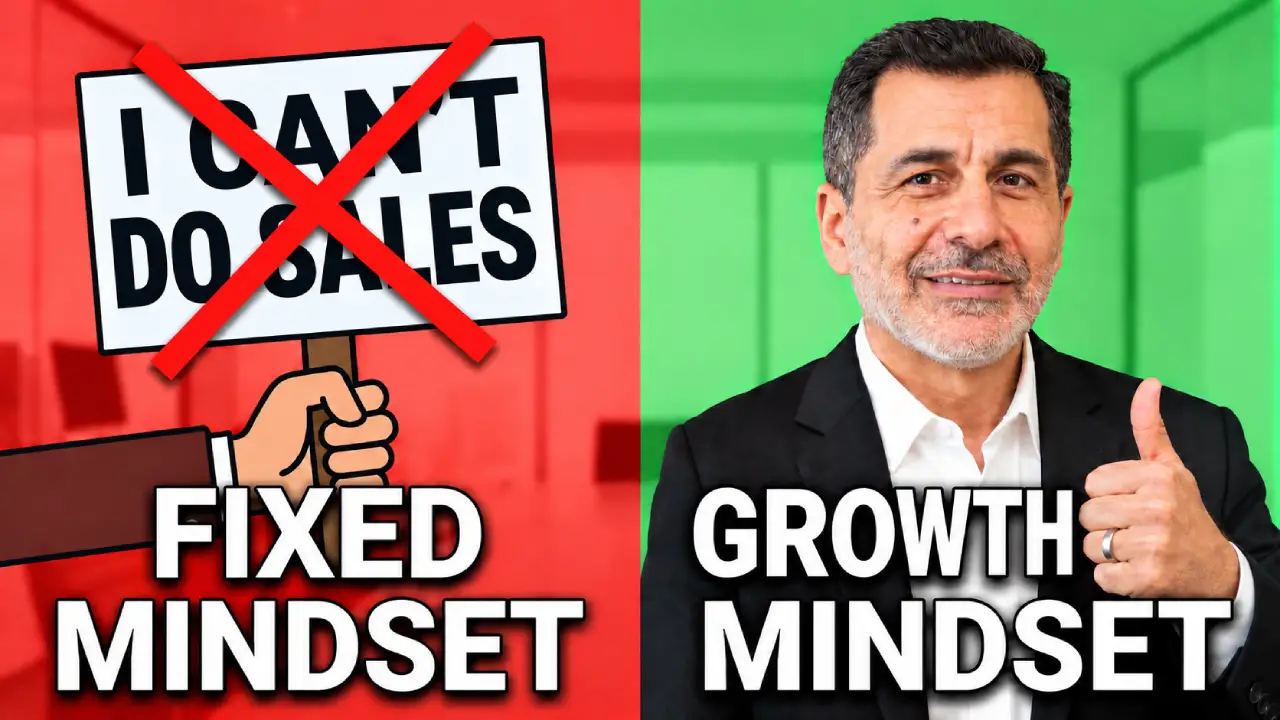
Knowing these principles is useful. Practicing them when you’re facing rejection or uncertainty is harder.
In my latest video, I share five practical habits you can use to train yourself to respond differently, plus an Entrepreneurship Mindset Assessment to identify where you need the most work.
Subscribe to the Black Belt Startup Newsletter
Weekly, 5-minute insights to help you escape the 9–5, land your first clients, and grow a thriving business.