
Are these mistakes killing your sales calls?

Welcome to the Dojo!
A sales call can feel like a success right up until the buyer disappears.
That was the biggest lesson I took away after reviewing 50 consultant sales calls. The conversations weren't falling apart because consultants lacked expertise. They were losing momentum through small decisions that felt perfectly reasonable in the moment.
On the Mat
- Let’s Train: Why buyers disappear after great sales calls
- Ask Feras: “How much should I talk during a sales call?”
- Sharpen the Blade: [New video] Four small mistakes that cost big consulting deals
Let's Train
Four Small Mistakes That Cost Big Deals
Many consultants believe the proposal determines whether they win the business.
In reality, the proposal often confirms a decision that's already been made.
By the time a proposal reaches a buyer's inbox, they've already formed opinions about your credibility, how well you understand their business, and whether you're someone they can confidently recommend to others inside their organization.
That means every sales conversation matters.
As I reviewed call after call, I kept seeing the same four patterns.
The first showed up whenever the conversation became uncomfortable. The buyer slowed down to think, while the consultant sped up. More explanations. More examples. More reassurance. The instinct made sense, but it usually worked against them. Buyers often need a moment to process what they've heard. Silence doesn't automatically signal disagreement.
The second pattern appeared during discovery.
Many consultants rushed into solution mode the moment they recognized the client's problem. Their recommendations were often good. They simply arrived before the buyer felt completely understood. The consultants with the strongest discovery conversations spent more time exploring what had already been tried, what it had cost, and what would happen if nothing changed.
The third pattern had nothing to do with what happened during the meeting.
It involved everyone who wasn't there.
Your main contact may genuinely support your proposal, but they're rarely making the decision alone. Finance, operations, procurement, legal, and executive leadership all evaluate opportunities through different lenses. When you help your champion answer those questions before they're asked, your proposal has a much better chance of surviving the internal buying process.
The fourth pattern appeared during the last few minutes of the call.
Many meetings ended with something like, "I'll send a proposal next week."
It sounded productive.
Unfortunately, nobody left with a shared understanding of what would happen next.
The consultants who maintained momentum finished the meeting with clear ownership, agreed timelines, and defined next steps. They treated the sales process like a project with milestones instead of hoping enthusiasm would carry the opportunity forward.
One observation stood out above everything else.
None of these mistakes felt like mistakes while the conversation was happening.
That's why reviewing your own sales calls can be one of the fastest ways to improve. You begin noticing patterns that are almost impossible to see in real time. Small adjustments accumulate, confidence grows, and your close rate often follows.
Ask Feras Recap
🔥 The Challenge
"How much should I talk during a sales call?"
🛠️ What I Told Them
Data shows a 43/57 listen to speak ratio, but every conversation is different and there isn't a magic percentage for every call. Your goal is to create a balanced conversation where the buyer feels heard. If you notice yourself filling every pause or answering questions the buyer never asked, slow down.
Sharpen the Blade
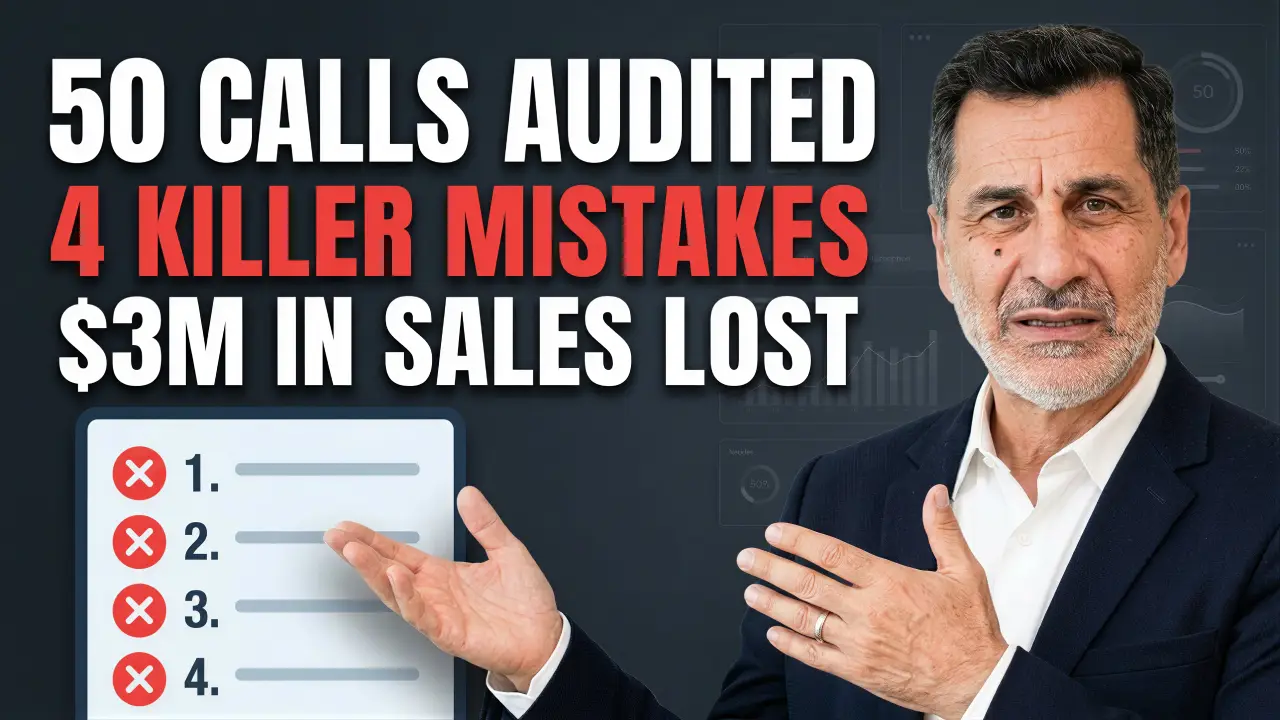
This week's video walks through the four sales call mistakes I found after reviewing 50 consultant calls, along with practical ways to avoid them on your very next client meeting.
Subscribe to the Black Belt Startup Newsletter
Weekly, 5-minute insights to help you escape the 9–5, land your first clients, and grow a thriving business.