
7 ways to negotiate a better consulting deal

Welcome to the Dojo!
A client asks you to lower your fee by 10%.
Many new consultants, me included when I started my first business, immediately start calculating how much margin they’re willing to sacrifice. But price may not even be the real issue.
Over the last several weeks, I’ve been working on an Ultimate Negotiation Guide for Consultants, drawing on more than two decades of negotiating consulting deals and 2,000+ proposals, including plenty of mistakes and expensive lessons along the way.
Last week, I covered what happens before you negotiate. This week, we’re getting into the negotiation itself with practical techniques you can use when a client pushes back.
On the Mat
- Let’s Train: Practical negotiation techniques you can use when a client pushes back.
- Ask Feras: “What if the client's budget really is lower than my price?”
- Sharpen the Blade: [Recently released video] The Ultimate Consulting Business Sales Negotiation Guide
Let's Train
Consulting negotiations generally involve more than price.
Clients may also want to change scope, timeline, payment terms, or risk.
Once you understand that, you have many more ways to structure a deal.
Here are several practices I've learned over more than two decades of selling consulting services.
1. Use budgetary quotes.
Early in the sales process, you may not know enough to provide a fixed price.
Give the prospect a reasonable range instead:
"Based on what I know so far, projects like this usually fall between $5,000 and $10,000."
Then watch their reaction.
They may tell you that's reasonable. Or that they've historically spent $4,000. Or that they only have $3,000.
You've learned something important before spending hours preparing a proposal.
2. Define your scope precisely.
I learned this one the expensive way.
We once scoped what appeared to be a simple website analytics project. We didn't clarify whether an upcoming e-commerce section was included.
We assumed it wasn't.
The client assumed it was.
We spent nearly three times the hours we'd budgeted.
A strong proposal should define deliverables, timelines, client responsibilities, assumptions, exclusions, revision limits, and the change-request process.
Then when the client asks for more work, you're negotiating the size of the engagement, not defending your value.
3. Negotiate payment terms.
If a client says your fee is too high, they may actually be struggling with when they have to pay.
A $20,000 project could potentially be structured around milestones instead of one large payment.
For larger companies with rigid procurement policies, breaking an engagement into phases may help you get paid sooner without fighting a policy you're unlikely to change.
4. Use honest scarcity.
If you genuinely have one project slot available, tell the prospect.
If you don't, don't invent one.
Fake scarcity may create urgency today, but consulting relationships depend on trust tomorrow.
5. Structure future promises.
A major global brand once asked us for a significant discount in exchange for introductions to roughly 20 sister brands.
We agreed.
The project went extremely well. We received additional work from that client.
But those introductions never materialized.
The mistake wasn't giving the discount. It was giving something concrete today in exchange for something vague tomorrow.
And throughout all of these practices, remember that a negotiation isn't a contest to see who can squeeze more from the other side.
You're trying to structure an engagement that your client wants to buy and that your business can successfully deliver.
Ask Feras Recap
 The Challenge
“What if the client's budget really is lower than my price?”
 What I Told Them
This is not an uncommon scenario.
Change the structure before automatically discounting. If your proposal is $7,500 and they only have $5,000, perhaps three sessions instead of four will work. The client meets their budget, while you reduce the work to protect your margins.
Sharpen the Blade
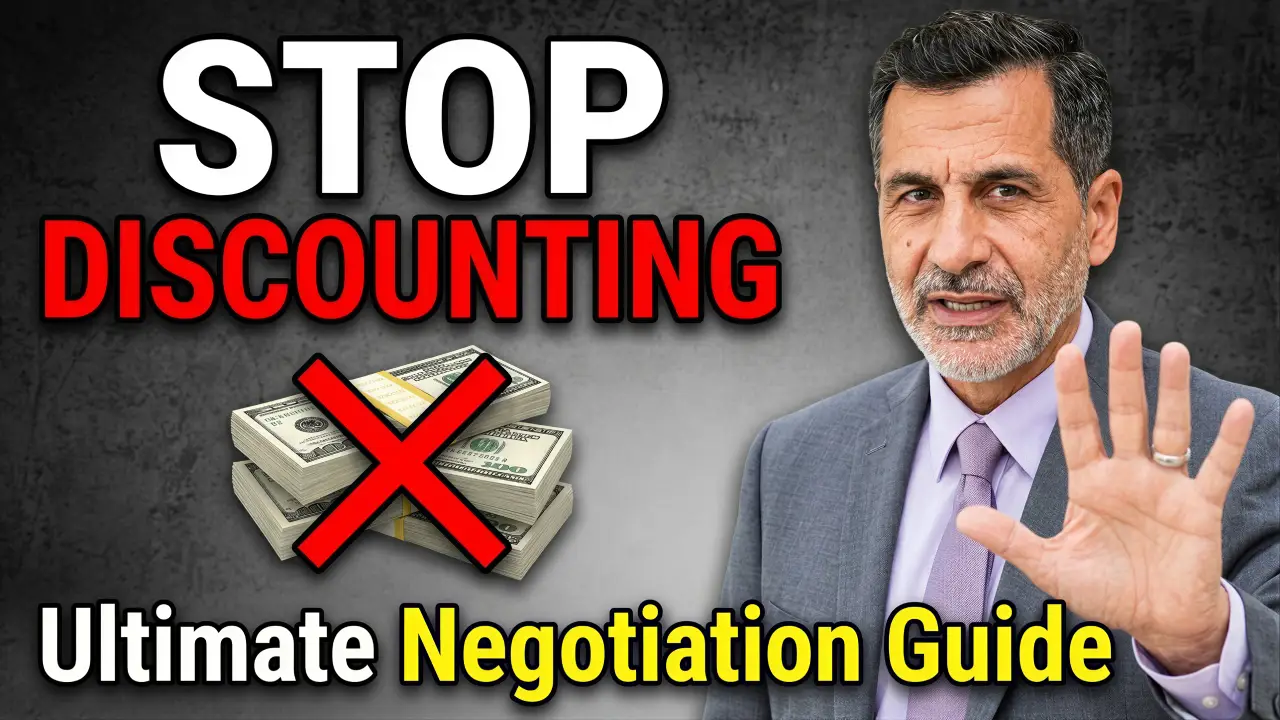
These are only some of the scenarios I walk through in The Ultimate Consulting Business Sales Negotiation Guide. I also demonstrate how I'd respond to actual client requests around pricing, scope, payment terms, and timelines.
Watch the complete negotiation guide before your next negotiation.
Subscribe to the Black Belt Startup Newsletter
Weekly, 5-minute insights to help you escape the 9–5, land your first clients, and grow a thriving business.